My Feelings Wheel
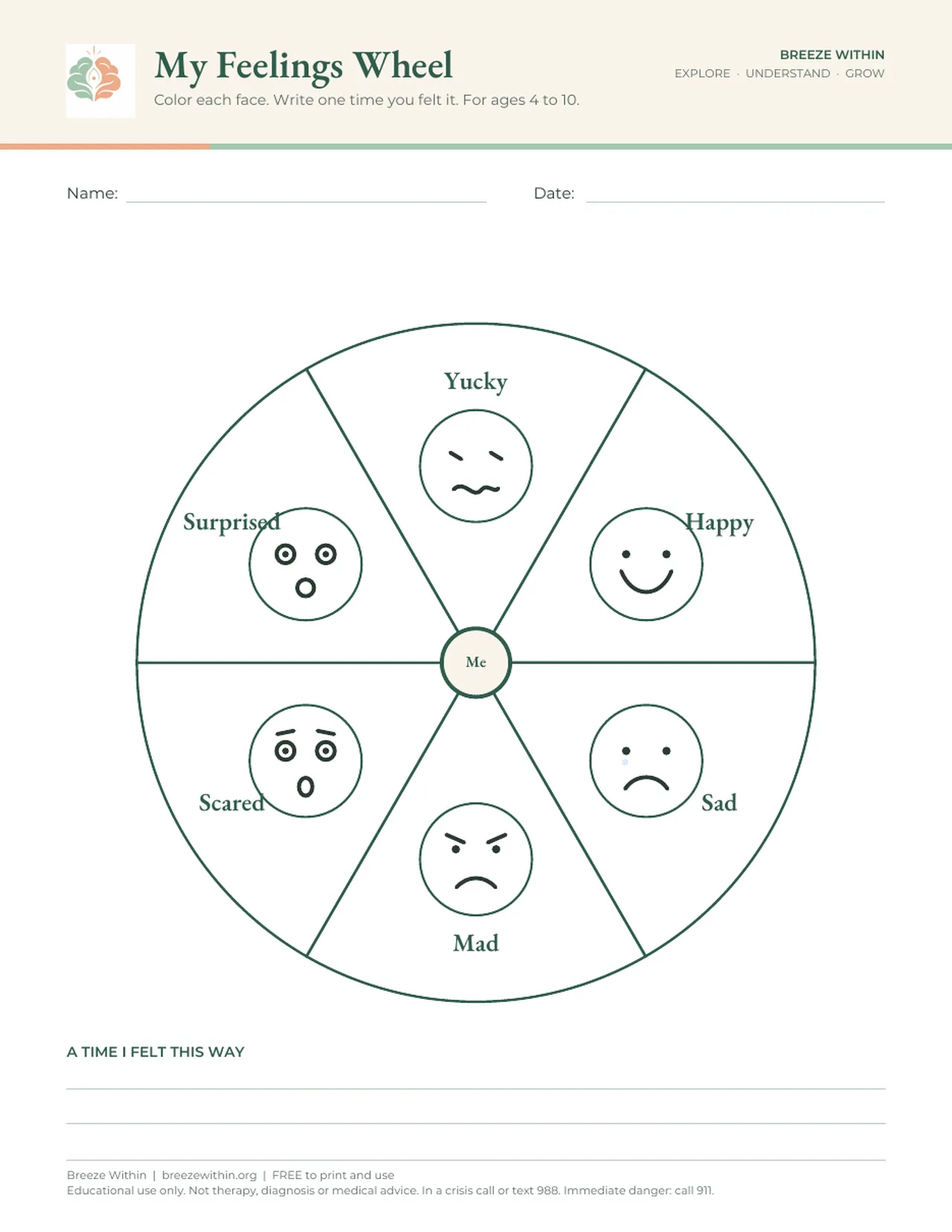
Six faces to color, plus space to write about a time each feeling showed up.
A feelings wheel children can tap, and FREE printable sheets for home and school.
Our kids and classroom area has a feelings wheel children can tap, plus FREE printable sheets for children, teachers and parents. Naming feelings is a first step toward handling them, and adults can model it every day.
Tap the face that is closest to how you feel right now. A grown up can read along.
Color it, draw it, breathe with it. Each sheet is one page with plenty of space to write.
Six faces to color, plus space to write about a time each feeling showed up.
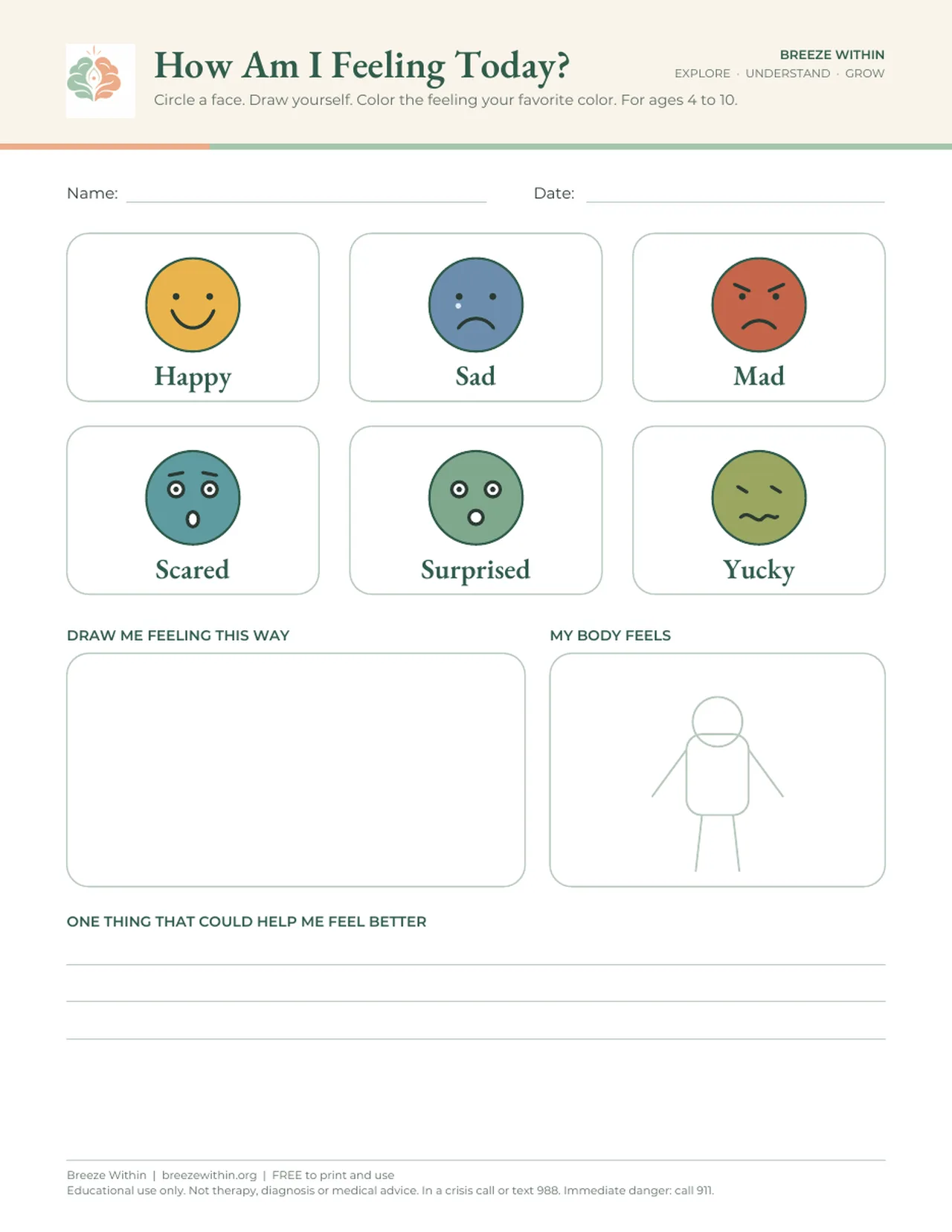
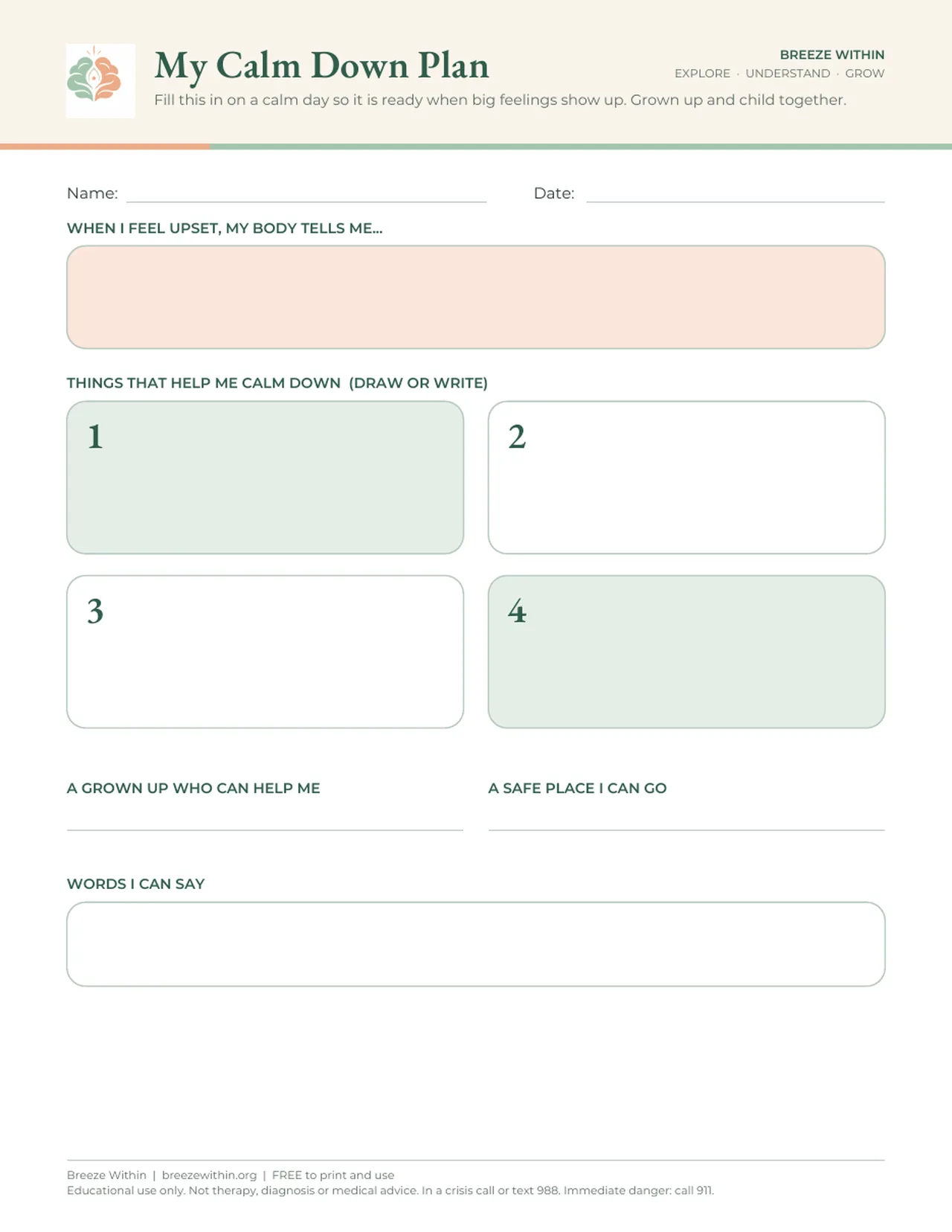
Circle a face, draw yourself and name what your body feels.
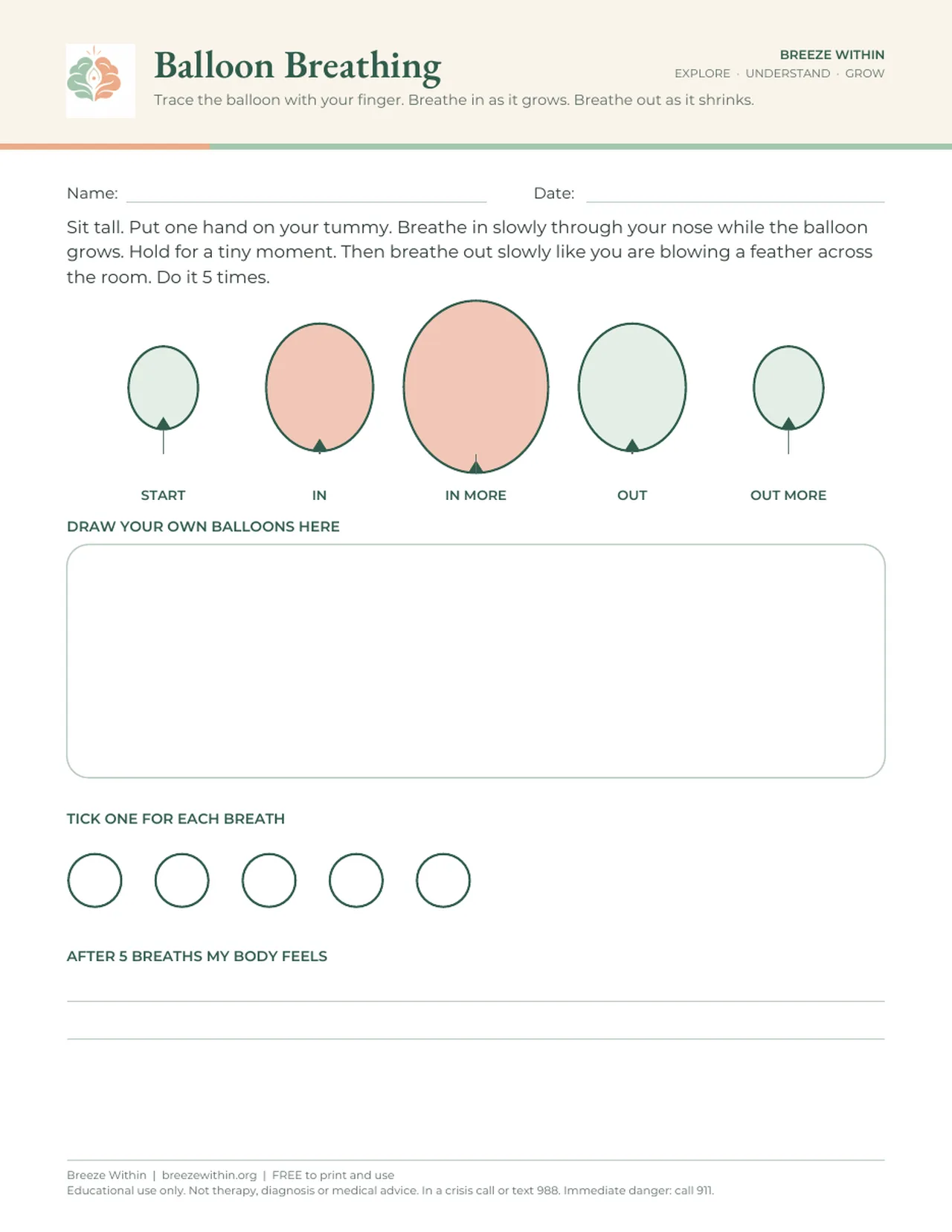
Trace the balloons while breathing in and out, then tick off five breaths.
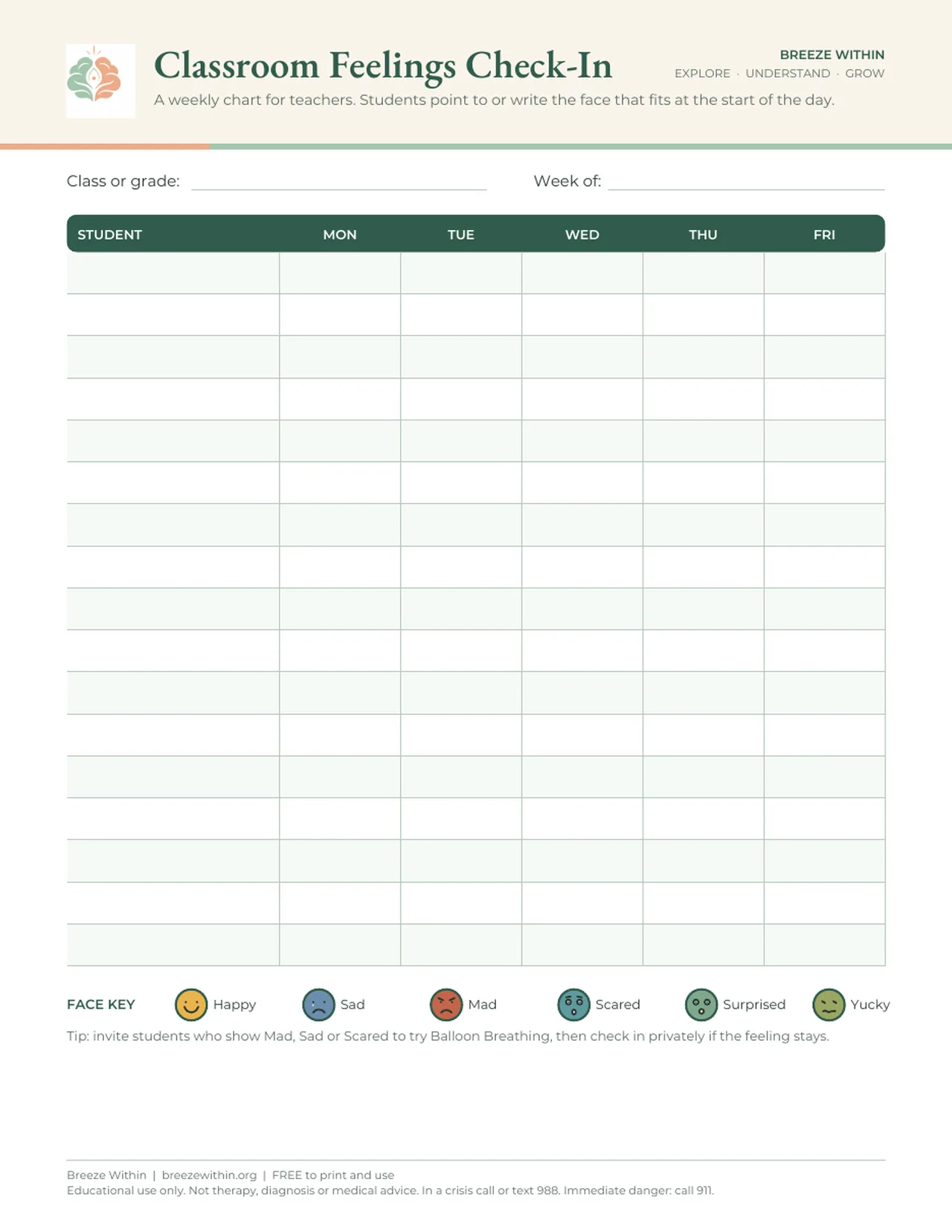
A quick weekly check-in that works for a whole class and takes under a minute a day.
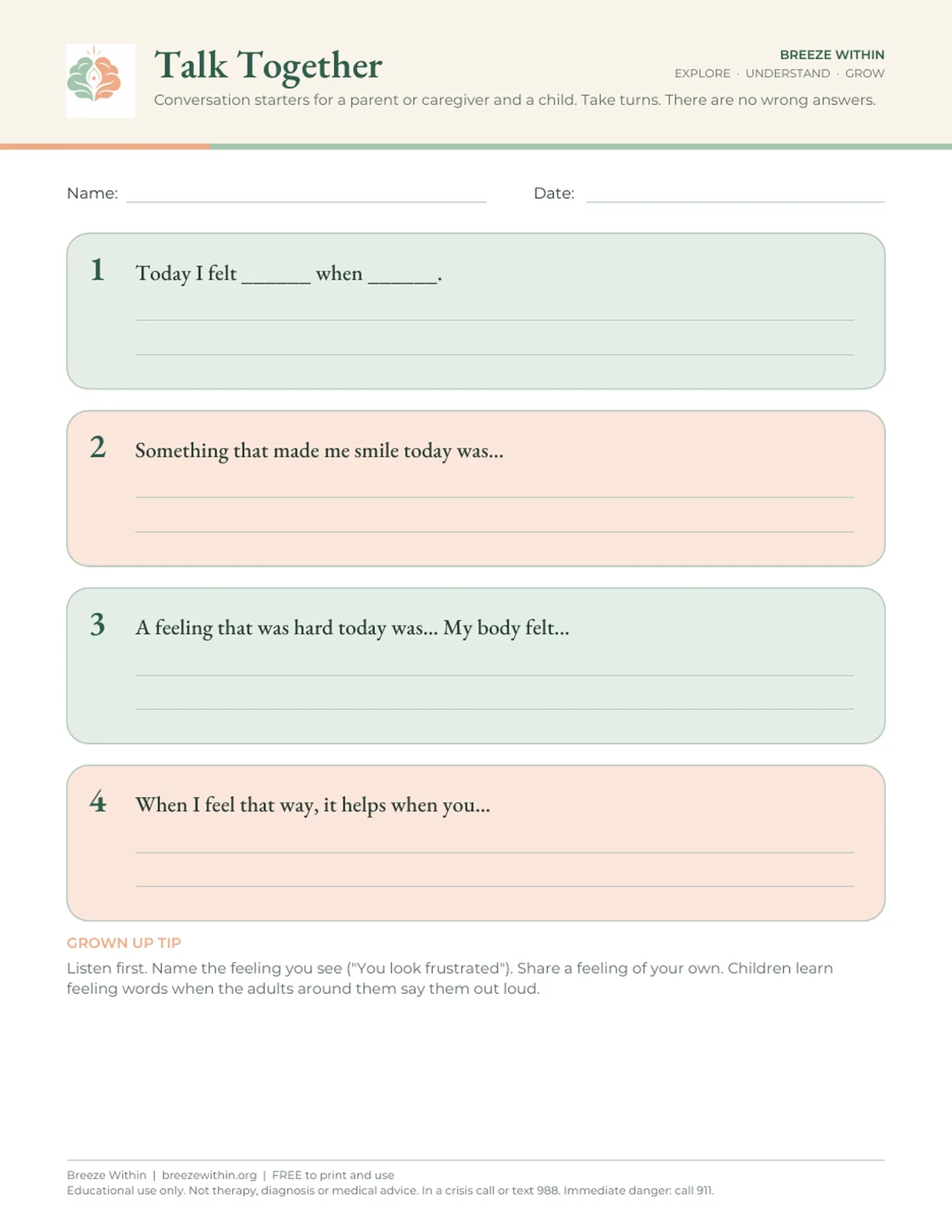
Start a calm conversation at home. Listen first, name the feeling and share one of your own.
Say the feeling you see in a calm voice, such as "You look frustrated." If you guess wrong, children often correct you, and that is a good start to the conversation.
These sheets are educational. If a child's distress lasts for weeks or affects school, sleep or friendships, talk with a pediatrician or a licensed professional. In a crisis call or text 988.
Children often feel emotions before they have words for them. The CDC notes that parents who listen and show understanding help children learn to notice and name emotions, and Head Start guidance says adults naming feelings out loud grows a child's feeling vocabulary.
The feelings wheel, check-in and balloon breathing sheets are written for roughly ages 4 to 10, with a grown up reading along for younger children. The classroom chart and talk together sheet are for adults to use with children.
Yes. Every sheet is FREE, prints on US Letter paper and leaves room to draw and write. Teachers and parents may print as many copies as they need for non commercial use.
No. These are educational activities that support everyday conversations about feelings. If a child seems very sad, worried or angry for weeks, or daily life is affected, talk with a pediatrician or a licensed child mental health professional.
Stay with them, take it seriously and get help right away. Call or text 988 any time, or call 911 for immediate danger.
Educational use only. Breeze Within shares general mental health education. It is not therapy, counseling, diagnosis, medical advice or a substitute for care from a licensed professional. If you are in crisis, call or text 988. For immediate danger, call 911.